Memory Model Guide
Understand why RAGit separates working memory from searchable long-term memory
RAGit does not treat memory as one giant transcript. It separates memory by purpose so that an agent can resume work without dragging every raw note, tool output, or past conversation back into the prompt.
The Problem
Agents do not naturally remember your project the way a teammate does. A raw session log can tell you everything that happened, but it is bad at telling you what matters right now.
For a user, the real question is simpler:
- What was I trying to do?
- Which constraints still matter?
- What is still open?
- What knowledge is now stable enough to reuse later?
RAGit splits memory so it can answer those questions directly instead of replaying the entire past.
The Mental Model
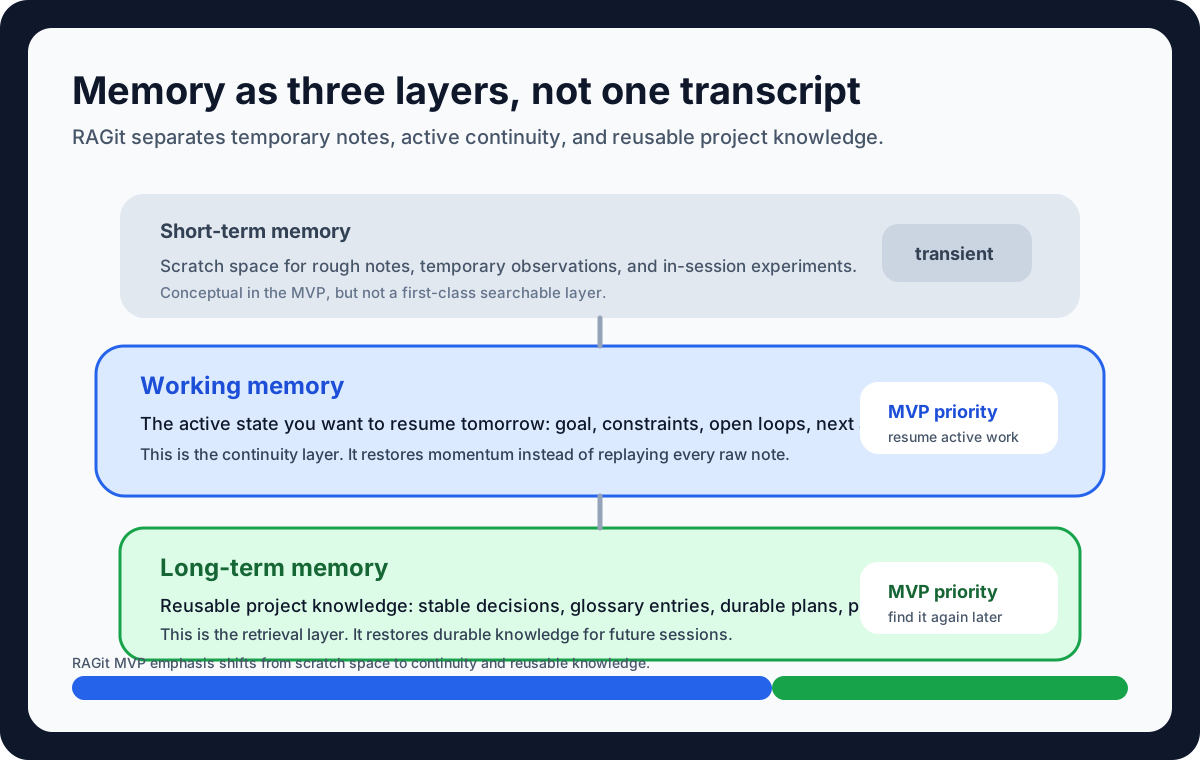
This diagram is the fastest mental model for the page. The top layer is temporary, the middle layer is active continuity, and the bottom layer is durable project knowledge. In the current MVP, RAGit puts most of its weight on the middle and bottom layers.
Short-term memory
Temporary scratch space for rough notes, partial observations, and in-session thinking. It exists conceptually, but it is not the main searchable layer in the MVP.
Working memory
The active state you want to resume: goal, constraints, open loops, and next actions. This layer restores momentum.
Long-term memory
Reusable project knowledge such as stable decisions, glossary entries, and durable plans. This layer restores durable knowledge.
Think about memory in three layers:
- Short-term memory is scratch space. It holds temporary notes, rough ideas, and in-progress observations inside a session.
- Working memory is the active state you want to resume tomorrow. It should tell you the goal, constraints, open loops, and next actions.
- Long-term memory is reusable project knowledge. It contains things that have become stable enough to search and reuse across future work.
In the current MVP, RAGit emphasizes the second and third layers. Working memory helps you continue a task. Long-term memory helps you find durable knowledge again later. Short-term memory still exists conceptually, but it remains transient scratch space rather than a first-class searchable layer.
Why Two Places Exist
RAGit uses two places because the project needs two different kinds of memory behavior.
.ragit/memory/**is the control plane. It stores session wraps and current working state. This area is good for resuming work, but it is not meant to be your general searchable knowledge base.docs/memory/**is the searchable corpus. It stores promoted decisions, glossary entries, and plans as normal documents that can participate in ingest and snapshot-scoped retrieval.
This split protects signal quality. Working memory stays focused on “what is active now,” while long-term memory stays focused on “what should remain findable later.”
Command Flow
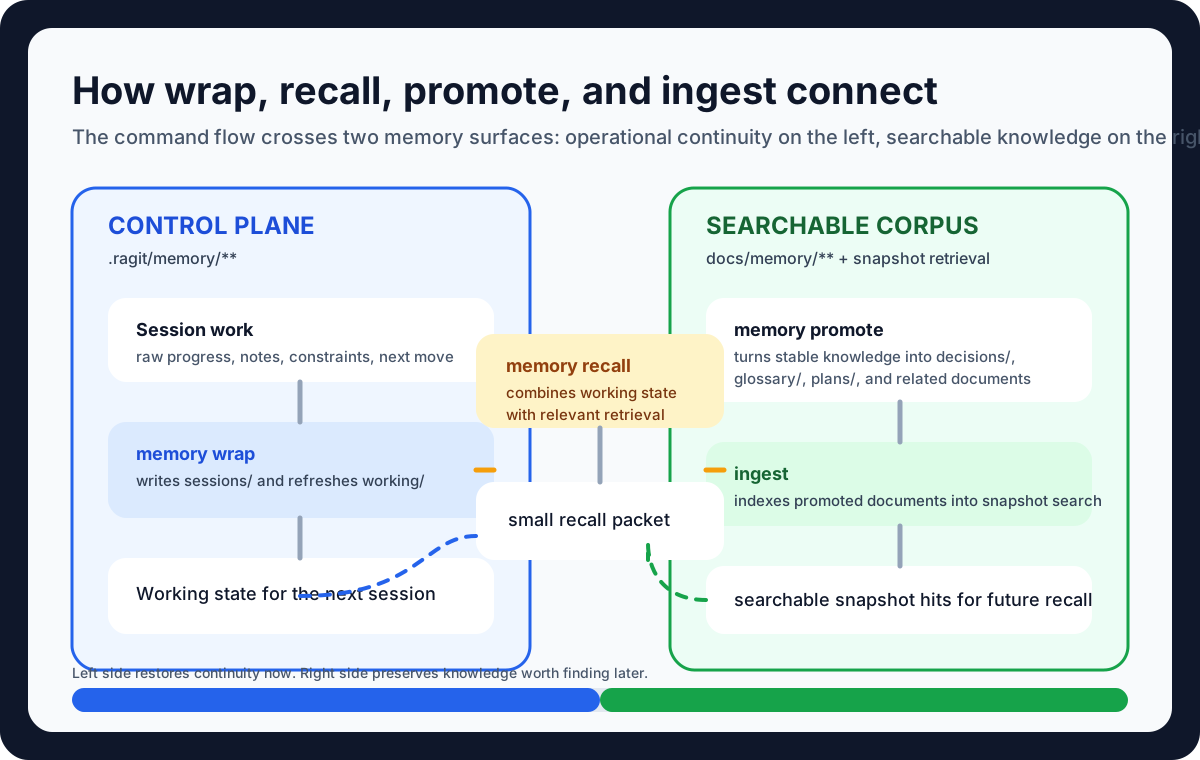
The left lane is about continuity now. The right lane is about knowledge worth finding later. memory recall is the bridge between them: it starts from current working state and then pulls in relevant snapshot-scoped retrieval.
A simple rule of thumb
memory wrap preserves continuity, memory recall restores the smallest useful packet, and memory promote crystallizes stable knowledge into searchable project memory.
Exact path sketch
CONTROL PLANE (.ragit/memory/**)             SEARCHABLE CORPUS (docs/memory/**)

session work
   |
   +--> memory wrap ------> sessions/ + working/
   |
goal for next session
   |
   +--> memory recall <--- working/ + snapshot retrieval
   |                     --> recall packet
   |
stable knowledge
   |
   +--> memory promote --------------------> decisions/ glossary/ plans
                                              |
                                              +--> review + git commit
                                                       |
                                                       +--> ingest --> searchable snapshot hits
How Commands Map
memory wraprecords the state of the work you want to resume. It writes session history and refreshes the current working state.memory recallreconstructs the smallest useful packet for continuing work. It starts from what is active now in working memory and then supplements it with relevant snapshot-scoped retrieval results rather than replaying the full past.memory promoteturns stable knowledge into durable documents. It is how an important conclusion stops being a session detail and becomes project memory. Promotion does not ingest those new worktree files: review them, commit them, and then runragit ingest --allfor the first snapshot or a supported incremental ingest after a trusted base exists.
The key idea is that wrap is for continuity, recall is for restoration, and promote is for crystallization.
When Exact Snapshot Retrieval Is Unavailable
memory recall is the only read path that may degrade. If the exact HEAD manifest or canonical store cannot be used, recall returns snapshotSha: null, sets snapshot.status to unavailable, and includes the operational error code in warnings.
The degraded packet uses only working memory and reviewed artifact-derived content. Ranking is keyword-, authority-, and recency-based with no embedding or canonical-store call. It must not be interpreted as snapshot-backed durable knowledge. query and context pack remain strict and fail instead of taking this degraded path.
A Simple Example
Imagine you stop work on an auth migration at the end of the day.
You use memory wrap to save the current goal, the rule that snapshot contracts must stay intact, the open loop about token refresh, and the next action for tomorrow. That state lives in .ragit/memory/**.
The next morning, you do not want to reread every note. You use memory recall. RAGit pulls the current working state and combines it with relevant retrieved knowledge, such as earlier decisions about auth boundaries or plans stored in the repository. You get a recall packet that tells you where to restart.
Later, once a rule becomes stable, such as “refresh token handling must remain outside snapshot mutation,” you use memory promote. That rule becomes a durable document in docs/memory/**. After review, commit, and ingest, future sessions can search it like any other project knowledge.
Common Misunderstandings
Why not search .ragit/memory/** directly?
Because working state changes often and exists to help you resume active work. It is operational state, not automatically durable knowledge.
Why is promote separate from wrap?
Because not every session note deserves to become long-term memory. Promotion is the deliberate step that keeps the searchable corpus clean.
When should I promote something?
Promote it when you expect a future session to benefit from finding it without reopening the original session history. In the current MVP, that usually means a stable decision, a reusable term, or a plan worth searching later.
Is working memory the same as a snapshot?
No. A snapshot answers, “What knowledge is searchable for this commit?” Working memory answers, “What am I actively trying to continue right now?”
Why keep both working memory and long-term memory?
Because they solve different recovery problems. Working memory restores momentum. Long-term memory restores durable knowledge.